
Rose Canine is located in Cesenatico, and is the ideal starting point for discovering Romagna.
We recommend Cesenatico as your first stop, with its enchanting canal port designed by Leonardo da Vinci. Then there are many places in Romagna that offer a fascinating mix of history, culture, nature and entertainment, perfect for those who want to explore an area full of surprises.
Cesenatico

The beating heart of Cesenatico is its characteristic canal port, an engineering feat designed by none other than Leonardo da Vinci. Here you can admire the colorful fishing boats, take a walk along the piers or enjoy an aperitif in one of the many bars.
Cesenatico offers sandy beaches, equipped with every comfort and ideal for relaxing in the sun. The beach establishments offer entertainment, water sports and services for the whole family.
In the evening, Cesenatico comes alive with a lively nightlife, thanks to its trendy clubs, discos, pubs and restaurants where you can taste Romagna cuisine.
In addition to its seaside charm, Cesenatico is also a city rich in history. The Maritime Museum presents the ancient maritime traditions of the place and a rich collection of boats.
Another historic site is Piazza Pisacane, where you can see the statue of Giuseppe Garibaldi, commemorating the passage of the hero of the Two Worlds through Cesenatico on August 2, 1849, and the reason why the citizens of Cesenatico call it Piazza Garibaldi.
The Hero of Two Worlds reached the town after abandoning the now hopeless defense of the Roman Republic, pursued by Austrian troops. Arriving in Cesenatico, he requisitioned some vessels and, despite a strong storm, managed to escape after a skillful maneuver. He headed toward Venice, which was strenuously resisting the Austrians.
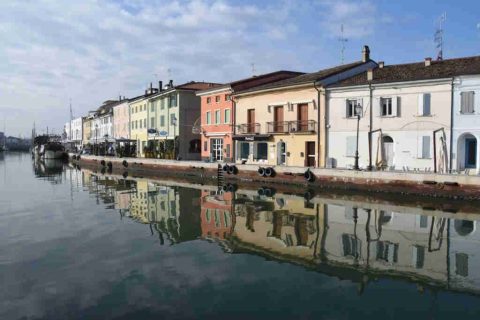
On the right side of the square, the clock tower was erected in 1580 by Vice-Cardinal Giovanni Pietro Ghisleri. Travelers arriving from the road to Cesena would pass through the vaulted passageway. The tower collapsed in the 1875 earthquake.
The statue of the Immaculate Conception, which was located in a niche beneath the tower clock, was unscathed by the earthquake. The terracotta and plaster statue was placed in the early 1900s on the façade of the church of San Giacomo Apostolo, where a niche was created to house it in response to popular devotion. After the parish was restored in 1999, it was returned to its original niche in the church façade.
Near the bridge are two Venetian columns. They bear witness to the brief period in which Venice dominated Porto Cesenatico, from 1503 to 1505, when the town returned to the Papal States. The two columns on either side of the bridge are made of pink granite and likely had the lion of St. Mark on the capitals, one, and the other, a statue of the local patron saint.
Ravenna
Ravenna was the capital three times: of the Western Roman Empire, of the Ostrogothic Kingdom and of the Byzantine Exarchate. This historical stratification has left an indelible mark on the city, making it a true open-air museum.
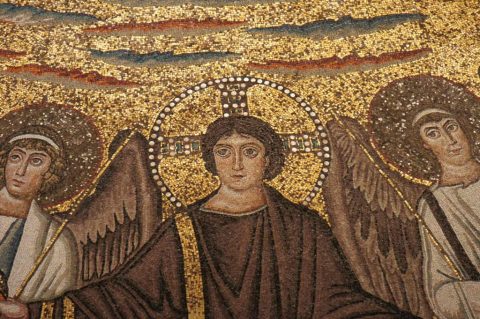
The main reason to visit Ravenna is its magnificent mosaics, a UNESCO heritage site. These masterpieces of Byzantine art decorate the walls of basilicas, mausoleums and baptisteries, creating a magical and evocative atmosphere.
What to see in Ravenna:
- Basilica of San Vitale: A jewel of Byzantine architecture, with mosaics depicting Emperor Justinian and Empress Theodora.
- Mausoleum of Galla Placidia: A small building that houses one of the oldest and most beautiful mosaics in Ravenna.
- Arian Baptistery: An octagonal building with a mosaic representing the baptism of Christ.
- Mausoleum of Theodoric: An imposing circular building, built with a single block of stone.
- Dante’s Tomb: Here the Supreme Poet rests, in a very evocative place.
- National Museum: A museum that collects archaeological finds and works of art from across the city.
Po Delta Park
The Po Delta Park is one of the most important wetlands in Europe and a protected area of great naturalistic value, and offers a mosaic of different environments: sandy dunes, pine forests, salty valleys, lagoons and reed beds.
Not far from Cesenatico, the mouth of the Bevano river is one of the most suggestive corners of the Park. Here, the meeting of the fresh waters of the river and the salt waters of the sea creates an ideal habitat for numerous species of birds.

- Storks: A symbol of good luck, storks often nest in the tops of the tallest trees, offering a fascinating sight with their long legs and red beaks.
- Herons: Elegant and silent, the different species of herons move gracefully among the reeds, looking for fish and small amphibians.
- Flamingos: With their bright pink plumage, flamingos are among the most beloved birds. In some seasons, large groups of flamingos can be seen feeding in the shallow waters.
- Coots: These black-plumaged ducks with a white spot on the forehead are very common in the humid areas of the Delta.
- Cormorants: With their dark plumage and long, hooked beaks, cormorants are skilled fishermen. They often perch on rocks or poles, spreading their wings to dry.